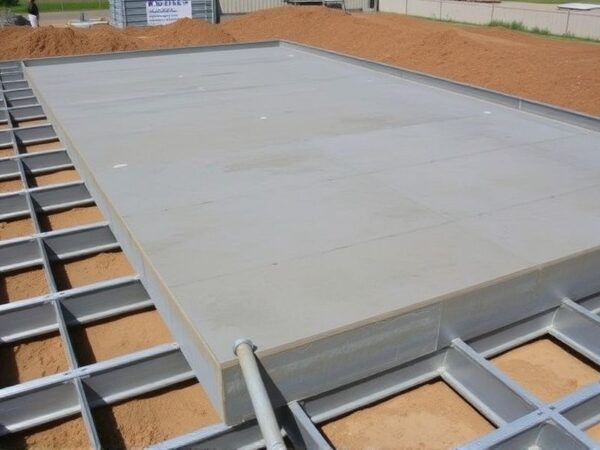
Getting Span Length Right: The Smart Way to Design Composite Slabs with Metal Decking
Why Span Length Keeps Engineers Up at Night
Let’s be honest – when you’re staring at blueprints for a composite slab system, that span length measurement isn’t just a number. It’s the make-or-break factor that determines whether your design will hold up (literally) or become someone’s expensive lesson learned. I’ve seen projects where an extra foot in span length turned what should’ve been routine construction into a structural nightmare. Remember that parking garage collapse in Dallas last year? Turns out they pushed the span limits just a bit too far.
The Goldilocks Principle of Span Lengths
Getting span length right is like finding that perfect porridge temperature – too short and you’re wasting materials, too long and you’re risking deflection issues. Most projects find their sweet spot between 8-15 feet, but here’s the kicker: that ideal range shifts based on three key players:
- The metal deck’s groove pattern (ever worked with re-entrant vs. trapezoidal profiles?)
- Concrete mix design – that 4,000 psi mix behaves differently than 6,000 psi
- Live load requirements (office buildings vs warehouses play by different rules)
Real-World Math Behind the Magic
Let’s break down a typical scenario I encountered last month. A mid-rise office project wanted to maximize open space with longer spans. By switching from 22-gauge to 18-gauge decking and adjusting the concrete aggregate size, we safely extended spans by nearly 20%. The table below shows how small changes create big impacts:
| Deck Thickness | Max Span (ft) | Material Cost/SF |
|---|---|---|
| 22-gauge | 10.5 | $4.20 |
| 20-gauge | 12.8 | $4.75 |
| 18-gauge | 15.3 | $5.40 |
Construction Site Truths They Don’t Teach in School
Here’s where textbook designs meet reality. On a recent hospital project, we discovered the hard way that longer spans require military-precision pouring sequences. The crew tried to pour two long spans simultaneously – cue the cracking sounds. Lesson learned? For spans over 12 feet:
- Use shrinkage-compensating concrete mixes
- Install temporary mid-span props during curing
- Sequence pours from center outward
When Good Spans Go Bad
Ever seen a composite slab that looks like a rollercoaster? I have. A retail project ignored deflection calculations for their 16-foot spans, resulting in 2 inches of sag – enough to scrap the entire floor finish system. The fix? We retrofitted with steel channels at mid-span, but that added weeks of delay and 15% cost overrun. Moral of the story? Always run those deflection checks early and often.
Pro Tips From the Trenches
After 20+ years in the game, here’s my cheat sheet for span success:
- For spans 8-10ft: Standard 22-gauge decking works great
- 10-13ft: Upgrade to 20-gauge and consider welded wire mesh
- 13ft+: Bring out the big guns – 18-gauge with rebar reinforcement
And here’s a freebie – always check the decking manufacturer’s span tables. Their engineers know their product’s limits better than anyone.
The Future of Span Optimization
New materials are changing the game. High-strength lightweight concrete mixes now allow spans 10-15% longer than traditional mixes. Pair that with composite decking using embossed patterns for better bonding, and we’re looking at a whole new world of possibilities. Just last month, we achieved a 17-foot span in a lab test using these advanced materials – something unheard of five years ago.
Your Span Length Checklist
Before finalizing those plans, run through this quick mental checklist:
- ✔️ Verified live/dead load calculations
- ✔️ Deflection limits checked for finishes
- ✔️ Decking manufacturer’s specs reviewed
- ✔️ Construction access considered
- ✔️ Vibration analysis completed
Miss any of these? You might be setting yourself up for callbacks. Trust me, I’ve been there.
Span Length Wins and Fails
Let’s end with some war stories. The good: A school project where optimizing spans saved $200k in steel costs. The bad: An apartment complex needing expensive underpinning after span-induced cracking. The ugly? Let’s just say some projects make you wish you’d double-checked those load calculations.
At the end of the day, getting span length right in composite slab design isn’t rocket science – it’s harder. It requires equal parts textbook knowledge, practical experience, and healthy respect for physics. But nail this critical dimension, and you’ll create structures that stand the test of time (and keep the lawyers away).




Reviews
There are no reviews yet.