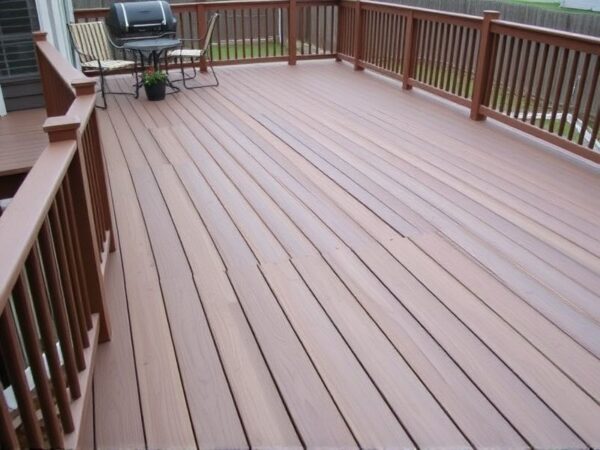
Composite Decking on a Slope: Your Go-To Guide for a Stunning (and Stable) Outdoor Space
So, you’ve got a sloped backyard and dreams of a gorgeous composite deck? Good news: it’s totally doable. But let’s be real—installing decking on uneven ground isn’t exactly like building on flat concrete. I’ve seen folks nail this transformation (literally), and I’ve also helped fix decks that started sliding down hillsides. Let’s break down what really matters when working with slopes, from avoiding water nightmares to keeping your structure rock-solid.
Why Slope Matters More Than You Think
Picture this: my neighbor tried building his deck without checking the slope angle. Two rainy seasons later, his “floating” deck boards had created a mini swimming pool. Slope isn’t just about looks—it’s about physics. Even a gentle 5-degree incline changes how water flows, where weight distributes, and what support systems you’ll need. Get this part wrong, and you’re either rebuilding next year or dealing with constant maintenance.
Tools You’ll Actually Use (No Fancy Gadgets)
Forget those overly technical tool lists. Here’s what I keep in my truck for slope jobs:
– Laser level (way better than old-school string lines for slopes)
– Heavy-duty drill with torque control
– Composite-specific hidden fasteners
– Shovel and pickaxe (because digging on slopes is brutal)
– 4-foot carpenter’s level
Pro tip: Rent a transit level if your slope’s steeper than 30 degrees—it’s worth the $50/day.
The Slope Measurement Hack Most Pros Use
Here’s how I measure slopes without complicated math:
1. Stake a 6-ft board horizontally at the slope’s base
2. Use your laser level to mark where the slope meets the board’s top
3. Measure that vertical gap – every 1″ equals about 1.4 degrees of slope
For example, if you get a 12″ gap, you’re working with roughly a 17-degree slope. This method isn’t NASA-precise, but it’s saved me hours on site.
Quick Slope Cheat Sheet
0-10 degrees: Basic framing works
10-20 degrees: Need diagonal bracing
20+ degrees: Consult an engineer
Framing Secrets for Rocky Terrain
Last summer, I helped build a deck on a 25-degree slope littered with boulders. Here’s what worked:
– Used concrete piers every 4 feet (instead of standard 6-ft spacing)
– Created stepped foundation beams that followed the slope
– Added cross-bracing between posts
The key? Your frame needs to work with the slope, not against it. I’ve seen too many decks fail because someone tried forcing a flat frame onto angled ground.
Drainage Solutions That Actually Work
Water is public enemy #1 for sloped decks. My golden rule: plan for twice the drainage you think you need. For moderate slopes (under 15 degrees), spacing boards 1/8″ apart usually does the trick. Steeper than that? Consider these:
– Channel drains: Hide these along the high side
– Permeable underlayment: Lets water pass through to the soil
– Gradual grading: Slope your deck surface 1/4″ per foot toward drainage points
Design Tricks to Make Slopes Disappear
Client had a steep backyard that felt claustrophobic. We used:
– Tiered decking with planter walls
– Diagonal board patterns
– Glass railings to maintain sightlines
The result? You’d never guess there’s a 12-foot elevation change. Pro tip: Darker composite colors help visually “flatten” steep slopes.
When to Call a Pro (And When to DIY)
Let’s be honest—not every slope project is DIY-friendly. If your site has:
– Existing drainage issues
– Retaining walls over 3 feet
– Slope exceeding 30 degrees
…pay for the engineering consult. But for gradual slopes? With proper prep, a motivated DIYer can absolutely handle it. Just don’t skip the permit process—I’ve seen $20k decks get torn down over paperwork.
Material Showdown: Composite vs. Wood on Slopes
| Feature | Composite | Pressure-Treated Wood |
|---|---|---|
| Slope Adaptability | Easier to contour | Requires more cutting |
| Water Resistance | No swelling/warping | Prone to moisture damage |
| 15-Year Cost | $$$ (lower maintenance) | $$ (higher upkeep) |
Real-World Fixes for Common Slope Issues
Problem: Erosion under deck
Solution: Install geogrid fabric before gravel base
Problem: Slippery surface when wet
Solution: Choose textured composite boards
Problem: Frost heave in cold climates
Solution: Extend footings below frost line (check local codes)
The Hidden Cost Most People Miss
Here’s the truth: Slope decks cost 20-40% more than flat ones. Why?
– Extra excavation
– Specialized hardware
– Additional engineering
But here’s the kicker—properly built slope decks can increase property values more than flat ones. That hillside view? Priceless.
My Favorite Slope Deck Hack
Use your slope to create built-in seating! Simply step the deck levels and add bench-height retaining walls. Bonus: The hidden storage under stepped decks is perfect for outdoor cushions and tools.
Final thought? Working with slopes isn’t about fighting the land—it’s about enhancing what you’ve got. Take the time to prep properly, choose materials wisely, and that challenging slope might just become your deck’s best feature. Got questions about your specific project? Drop them in the comments—I check daily!
P.S. If you remember one thing from this guide: Never skimp on footings. I once had to replace 23 posts because someone used concrete blocks instead of poured footings. Learn from their mistake!


Reviews
There are no reviews yet.