Composite Board Decking: The Smart Upgrade Your Outdoor Space Deserves
Let’s be real – maintaining a wooden deck can feel like a part-time job. Between sanding, staining, and replacing warped boards, it’s enough to make anyone wonder why we ever thought natural wood was a good idea. Enter composite board decking, the modern solution that’s turning backyard headaches into low-maintenance bliss. I’ve seen firsthand how this material transforms outdoor spaces, and honestly? It’s kind of a game-changer.
Why Your Backyard Needs Composite Decking
Remember that friend who bragged about their “maintenance-free” deck? They’re probably using composite boards. These engineered planks blend wood fibers with recycled plastics, creating a surface that laughs in the face of splinters, rot, and fading. Unlike traditional wood that starts looking tired after a few seasons, composite maintains its color and texture for years. I recently visited a coastal home where the composite deck looked brand new – despite facing salty ocean air daily for nearly a decade.
The Secret Sauce: What Makes Composite Boards So Tough
Let’s break down why these boards outlast their wooden cousins. The magic happens in the manufacturing process where materials get tightly bonded under high pressure. This creates a surface that:
- Resists moisture absorption (goodbye, warping!)
- Blocks UV damage (no more faded gray planks)
- Deters insects and mold (termites need not apply)
An interesting comparison: Where traditional wood decking might need replacement every 8-12 years, composite versions often last 25+ years with proper care. That’s three times longer, without any of the annual sealing or staining hassles.
Sun, Rain, or Snow – These Boards Don’t Care
Living in an area with wild weather swings? Composite decking handles temperature extremes like a champ. I’ve seen installations in both scorching Arizona and freezing Minnesota that hold up equally well. The key lies in the material’s thermal stability – it expands and contracts much less than wood, preventing those unsightly gaps and bulges that plague traditional decks.
Eco-Friendly Without the Granola Crunch
Here’s a cool fact: Most composite boards contain 90-95% recycled materials. Those milk jugs and sawdust scraps get a second life as beautiful decking. While the initial cost might be higher than pressure-treated wood, you’re actually saving trees and keeping plastic out of landfills. Plus, think about all the chemical treatments you won’t be applying year after year!
Looks That Fool the Eye (In a Good Way)
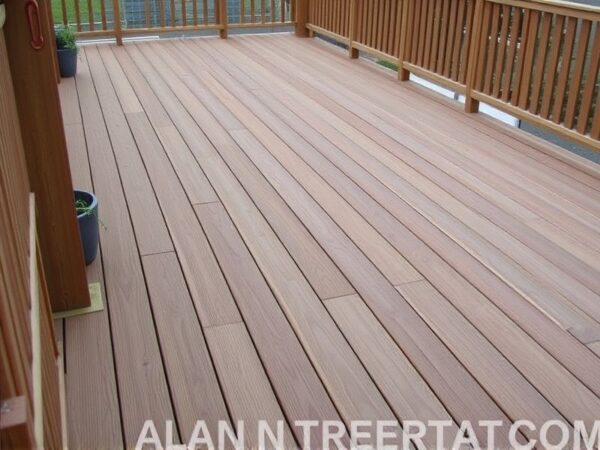
Modern composite decking isn’t your grandma’s plasticky-looking alternative. Manufacturers now offer stunning wood-grain textures and color options ranging from rich mahoganies to weathered driftwood grays. A neighbor recently installed composite boards with such realistic grain patterns that guests consistently ask when he’s going to stain his “new wood deck.”
Real Life, Real Applications
Where does composite decking shine brightest? Let’s look at some real-world scenarios:
- Pool Areas: No more worrying about slippery surfaces or chemical damage
- Waterfront Properties: Resists saltwater corrosion better than any wood
- High-Traffic Spaces: Restaurants and boardwalks love its durability
Case in point: A popular lakefront café replaced their warped pine deck with composite boards last year. Not only did customer complaints about splinters stop, but they’ve also saved hundreds in annual maintenance costs.
Keeping It Fresh: Maintenance Made Simple
Here’s the beautiful part – caring for composite decking takes minimal effort. A quick soap-and-water scrub a few times a year keeps most installations looking sharp. Pro tip: Use a soft-bristle broom to prevent surface scratching. Unlike wood, there’s no need for:
- Annual power washing
- Sandpaper marathons
- Expensive sealants
One caution: While composite resists staining, you’ll want to clean up BBQ grease spills promptly. Ask me how I learned that lesson…
Composite vs. Wood: The Showdown
| Feature | Composite | Traditional Wood |
|---|---|---|
| Lifespan | 25+ years | 8-15 years |
| Annual Maintenance | 1-2 hours | 15-20 hours |
| Upfront Cost | $$$ | $ |
| Long-Term Value | $$ | $$$ |
While the initial investment stings a bit, composite decking pays you back in time savings and replacement costs. Over 20 years, most homeowners actually spend less overall compared to maintaining wood decks.
Choosing the Right Composite Boards
Not all composite decking is created equal. Look for:
- Full-wrap protective shells (prevents color fading)
- Textured surfaces (better slip resistance)
- Hidden fastener systems (cleaner look)
Brands like Trex and TimberTech offer great warranties – some up to 50 years! That’s how confident manufacturers are in their products’ durability.
Installation Insights
While DIY-friendly, composite decking requires some special considerations. Leave proper spacing between boards for expansion, and use recommended fasteners. A buddy of mine tried to “save money” using regular screws – let’s just say his deck developed some interesting waves by season’s end.
When Composite Isn’t Perfect
Let’s keep it real – no product is flawless. Composite boards can:
- Feel warmer underfoot than wood in direct sun
- Show minor surface scratches over time
- Cost 2-3x more initially than pressure-treated lumber
But for most homeowners, these trade-offs are worth the long-term benefits. As one satisfied customer told me: “I’d rather have a slightly warm deck than spend every summer covered in wood stain!”
The Future of Outdoor Living
As technology improves, we’re seeing exciting innovations like integrated lighting channels and cooler-surface formulations. Some manufacturers now offer composite boards that stay up to 20% cooler than earlier versions – perfect for barefoot-friendly patios.
At the end of the day, composite board decking isn’t just a material choice – it’s a lifestyle upgrade. Whether you’re a busy parent who wants more backyard time, or a vacation rental owner needing bulletproof durability, this modern solution delivers where traditional wood falls short. Still on the fence? Go feel some samples at your local home center. That realistic wood grain texture might just surprise you!

Reviews
There are no reviews yet.