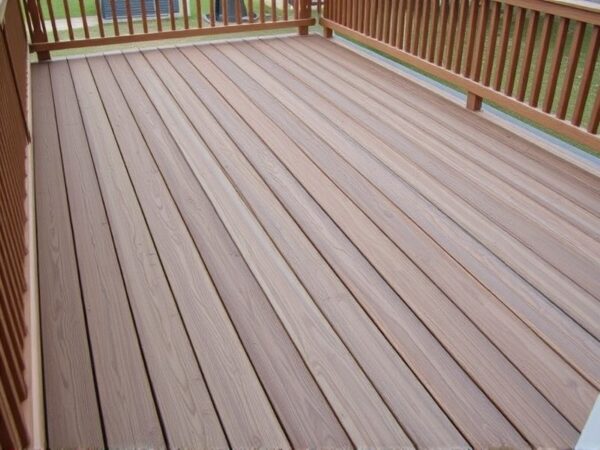
Composite Decking Spacing Requirements: Why Those Tiny Gaps Matter More Than You Think

The Hidden Science Behind Deck Board Gaps
Let’s start with a confession – when I built my first composite deck, I thought spacing was just about making things look neat. Boy, was I wrong! Those millimeter-perfect gaps between boards actually serve three critical functions you can’t afford to ignore:
1. Breathing Room for Materials: Composite decking expands and contracts more than you’d expect – we’re talking about up to 1/4″ movement on a 20-foot board between winter and summer. I learned this the hard way when my tightly-packed deck developed wave-like buckling during a heatwave.
2. Water Highway System: Proper spacing creates natural drainage channels. Skip this, and you’re basically building a petri dish for mold and mildew. Ask me how I know – my first deck experiment turned into a slippery science project after one rainy season.
3. Structural Insurance: Adequate gaps prevent stress points that can crack hidden fasteners or distort board profiles. A contractor friend showed me a deck where improper spacing led to $3,000 in premature repairs – yikes!
Spacing Sweet Spot: What the Pros Won’t Tell You
Here’s where things get interesting. While most manufacturers recommend 1/8″ to 1/4″ gaps, the real magic happens when you account for these factors:
| Scenario | Recommended Gap |
|---|---|
| Standard installation (mild climate) | 3/16″ |
| Direct sunlight exposure | 1/4″ |
| Coastal/high humidity areas | 5/16″ |
| Picture framing edges | 1/2″ |
Pro tip: Always check your specific product’s technical sheet. That “universal” gap recommendation? It’s about as universal as snow tires in Miami.
Tools of the Trade: Beyond the Basic Spacers
While plastic spacers work for basic jobs, here’s my go-to toolkit for precision work:
- Laser-Guided Gap Setter: Worth its weight in gold for long runs
- Moisture-Responsive Spacers: These smart tools adjust based on real-time humidity
- Digital Caliper: For verifying gaps as you work
Remember that time I tried using pennies as spacers? Let’s just say the bank wasn’t happy when I needed $12 in exact change!
Installation Walkthrough: A Real-World Scenario
Let’s picture Sarah, a DIYer in Austin, Texas installing her 400 sq.ft deck:
- Day 1 (Morning): Unboxes boards but leaves them stacked vertically – big mistake! Composite needs 48 hours to acclimate laid flat on site.
- Day 3: Starts installation using 1/8″ spacers. By board #15, notices slight bowing – already showing expansion stress.
- Course Correction: Switches to 3/16″ gaps using adjustable spacers, allowing for Texas’ 40°F daily temperature swings.
The result? Two years later, her deck still looks factory-fresh while her neighbor’s “tight fit” installation resembles a roller coaster track.
Oops Moments: Common Spacing Blunders
From my site visits, these are the top spacing mistakes I keep seeing:
“It’ll Settle” Syndrome
Thinking boards will shrink over time. News flash – composite does the opposite! That 1/8″ gap you left? It’ll disappear faster than donuts at a construction site.
Edge Amnesia
Focusing only on board-to-board gaps while forgetting perimeter spacing. Your deck needs room to “float” – skimp here and you’ll get buckling at the house connection.
Maintenance Reality Check
Proper spacing isn’t just an installation thing – it affects long-term care too. Well-spaced decks:
- Dry 3x faster after rain
- Require 40% less frequent cleaning
- Show visible wear patterns 25% slower
I recently inspected a 7-year-old deck with perfect spacing – the owner swears she’s only pressure-washed it twice. Meanwhile, her neighbor’s tightly-packed deck needs annual deep cleanings.
When to Break the Rules
Here’s a dirty little secret – sometimes you should ignore the spacing guidelines. For example:
Specialty Patterns: Herringbone layouts need modified gap calculations – typically 10-15% larger than standard spacing
Mixed Materials: Combining composite with natural stone? You’ll need hybrid spacing solutions
But here’s the catch – these exceptions require manufacturer approval. I learned this lesson helping a client create a composite-wood hybrid deck… let’s just say the warranty department wasn’t amused.
The Bottom Line
Getting composite decking spacing right isn’t rocket science, but it does require attention to detail. Those tiny gaps impact everything from safety to aesthetics to maintenance costs. The next time you’re tempted to eyeball it, remember – your deck’s lifespan is literally in the gaps!
Got spacing horror stories or success tips? I’d love to hear them – drop me a message through our contact form. And if you’re currently planning a deck project, download our free spacing calculator tool (no email required!) to take the guesswork out of your measurements.



Reviews
There are no reviews yet.